Mattress materials and construction
Inside Naturepedic’s Organic Mattress Materials
A mattress is more than its label. Cotton, wool, latex and coils each play a different part in how a bed feels, breathes and holds up over time. Understanding those layers—and checking how they are used in a particular model—can make comparisons more useful than relying on broad claims about what is “natural” or “organic.”
Published October 20, 2026
In mattress shopping, materials are often asked to carry a lot of meaning. “Organic” may suggest a cleaner bill of materials, a lighter environmental footprint or a more comfortable night. But those are not interchangeable promises. A certified fiber, a resilient foam layer and a pocketed coil system each answer different questions about a mattress. The practical task is to understand what a material is, where it sits in the construction, and whether its properties suit the person sleeping on it.
Naturepedic offers mattresses with organic material options, but no single description applies to every model. Designs, layer thicknesses, firmness choices and certifications can vary. A careful comparison begins with the model’s current specifications and a complete materials disclosure—not with assumptions based on a brand name or a category label.
This guide explains the roles cotton, wool, natural latex and support systems can play in mattress construction. It also outlines what to ask about certifications, comfort, care and longevity. The aim is not to declare one material universally superior. It is to make the choices easier to evaluate.
Start with the full construction, not the headline material
A mattress works as a system. Its surface fabric, quilt, comfort layers and support core interact under weight and movement. Two beds may both contain cotton and latex yet feel quite different because the materials differ in thickness, density, arrangement or firmness. A thin layer of a particular fiber does not define the whole sleeping experience; nor does the word “latex” tell you by itself whether a bed will feel soft, buoyant or firm.
When reading a product specification, look for a layer-by-layer description. It should identify the materials, their approximate thicknesses and, when relevant, whether a layer is customizable or replaceable. Ask whether a component is present throughout the mattress or only in the cover, and whether the stated certification applies to the finished product, a particular material or a manufacturing facility. If a listing offers only a broad phrase such as “made with natural materials,” request more detail.
Construction also affects how the bed responds. A quilted top can create a cushioned first impression. Latex may provide a springy, responsive feel. Coils can contribute lift and support, while the arrangement and gauge of those coils influence the overall response. These impressions are subjective, and body size, sleep position, preferred firmness and the foundation beneath the mattress all shape the result.
Cotton: the cover and the first point of contact
Cotton is commonly used in mattress covers and quilted panels. Its role is close to the surface: it forms part of the fabric a sleeper touches and may surround or contain other materials. In a mattress, cotton can be woven or quilted in different ways, and the finished feel depends on more than the fiber itself. Thread count, fabric construction, quilting pattern and the layers beneath it all matter.
Organic cotton refers to cotton produced under a defined set of agricultural and processing standards. A certification can help substantiate a specific claim, but the label should be read precisely. It does not automatically explain every component in a mattress, and it should not be treated as a guarantee of a particular feel or of better sleep. Ask which parts are certified and what standard applies to them.
For everyday care, follow the manufacturer’s instructions rather than assuming a mattress cover can be removed or washed. Many mattress covers are not designed for machine washing, even when the fabric itself is cotton. A washable protector can help limit stains and ordinary wear, but it may also change the surface feel or temperature. Check compatibility with the mattress warranty and care guidance before choosing one.
Cotton is not a substitute for a complete assessment of the mattress. A breathable fabric cannot, on its own, determine whether someone sleeps hot; room temperature, bedding, humidity and individual physiology are part of the equation. It is best understood as one element in the sleep surface, not a climate-control system.
Wool: quilting, loft and material disclosure
Wool may be used in a mattress quilt or comfort layer. It can contribute loft and a soft, slightly cushioned surface, while its natural structure can help manage moisture in the immediate sleep environment. Its exact effect depends on how much is used, how it is processed and where it appears in the construction. A wool layer in a quilt is not the same thing as a thick wool comfort layer.
Some mattresses combine wool with other fibers. A listed blend may include wool alongside alpaca or cashmere, for example, and the proportions matter when a shopper wants to understand the composition. Product descriptions should make clear whether a blend is present in the quilt, the comfort system or another part of the bed. If the language is general, ask for a more precise breakdown.
Wool can be relevant to flame-barrier construction, but shoppers should not infer that every mattress using wool follows the same design or meets every preference. Flame-safety requirements vary by market, and manufacturers may use different compliant approaches. Ask what the finished mattress contains and consult the current technical documentation for the specific model.
People with wool sensitivities or specific ethical, religious or dietary considerations may want to ask additional questions about sourcing and processing. “Natural” does not necessarily mean suitable for everyone. Nor does the presence of wool make a mattress maintenance-free: protect the surface as directed, avoid excess moisture, and use only cleaning methods approved by the manufacturer.
Natural latex: resilience, feel and formulation
Latex is often valued in mattresses for its elastic, responsive character. Rather than sinking in slowly in the way some people associate with memory foam, latex commonly pushes back more quickly as pressure shifts. That can make movement across the surface feel easier to some sleepers. The sensation is not universal, however, and depends on the latex formulation, firmness, thickness and the layers around it.
“Natural latex” is not a complete description of a mattress layer. Ask whether the latex is Dunlop or another process, how it is formulated, how thick the layer is and whether firmness can be adjusted. Dunlop latex is commonly made through a process in which latex is poured into a mold and vulcanized; the resulting feel varies with formulation and manufacturing. A process name alone does not determine comfort or quality.
Some systems allow a sleeper to select or rearrange latex layers. This can be useful when partners have different preferences or when a design permits firmness adjustments after purchase. But customization should be understood in practical terms: which layers can be changed, what options are available, whether the mattress needs to be opened, and what the return or exchange conditions are. A theoretically adjustable mattress is most useful when the process is clear and manageable.
Latex sourcing and certification are also worth checking. Certifications may address the content or processing of a material, but their scope differs. Look for the name of the certifying organization, the exact product or component covered and any limits on the claim. Do not assume that a certification for latex automatically applies to the cover, coils, adhesives or finished mattress as a whole.
Latex may not be right for every household. Anyone with a latex allergy should consult a clinician and seek detailed information about the mattress construction and relevant exposure considerations. Product labels and manufacturer guidance are more dependable than general online claims, especially where a health concern is involved.
Coils and the support core
Many organic mattresses combine natural or organic comfort materials with a spring system. Pocketed coils are individually wrapped springs designed to respond with some independence from their neighbors. Their contribution to support and motion transfer depends on the system as a whole, including the number and arrangement of coils, the perimeter construction and the comfort layers above them.
Coils are not usually the material that determines the first impression when a sleeper lies down. That sensation often comes from the quilting and upper comfort layers. Yet the support core can affect how the mattress holds the body, how it responds to movement and how stable its edges feel. A shopper comparing two hybrids should consider the coil system and the materials above it rather than treating “hybrid” as a guarantee of a particular firmness or performance.
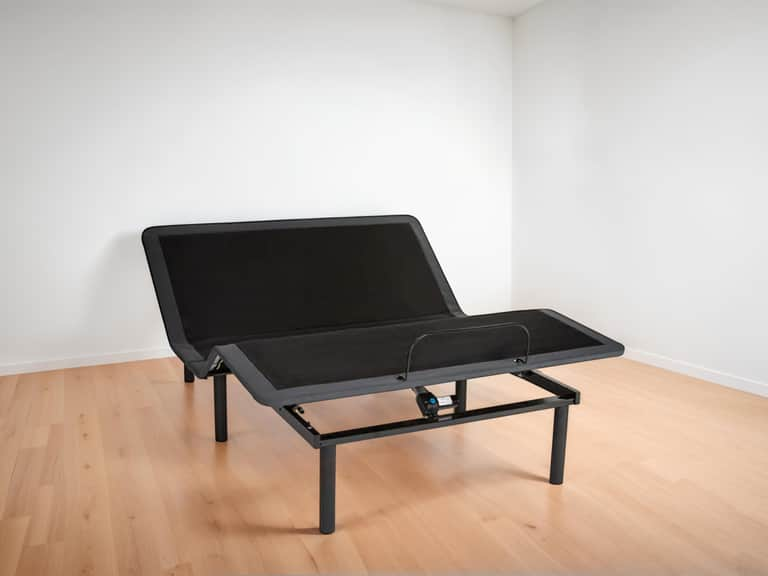
Foundation compatibility matters, too. A mattress needs a suitable base to perform as intended. Check the manufacturer’s recommended slat spacing, support requirements and whether an adjustable base is permitted. A well-made mattress on an unsuitable foundation may sag or feel different from the way it was designed to perform. If a separate foundation is being considered, confirm its height and dimensions as well as its structural support.
A model-specific example: the Naturepedic Elysium
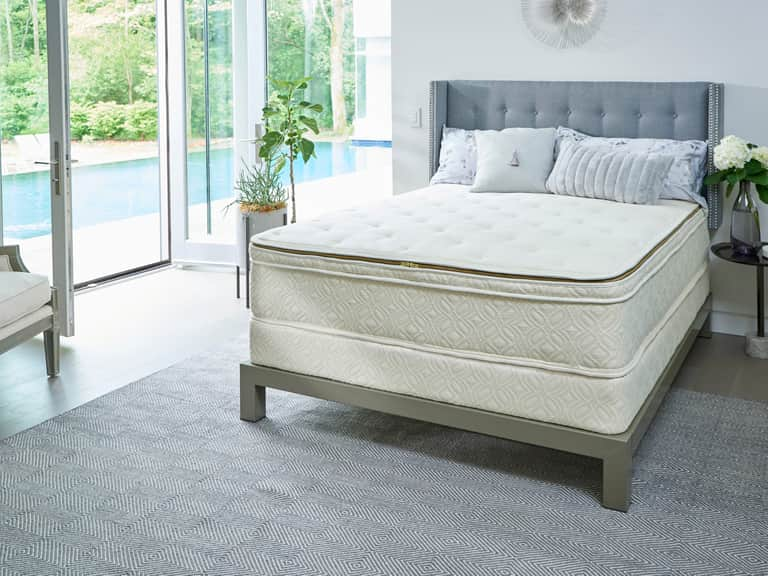
The Naturepedic Elysium Hybrid Organic Mattress illustrates how several material categories can appear in one design. Its listed construction includes a 500-thread-count organic sateen quilt with wool, alpaca and cashmere; three inches of customizable organic Dunlop latex; and 12 inches of organic wrapped coils arranged in two layers. The stated total profile is 15 inches.
Those details describe the model, not every Naturepedic mattress. They also offer a useful example of why the layer sequence matters. The quilted blend sits near the surface, the latex forms a substantial comfort component, and the wrapped coils make up the support system. Someone considering this design might ask how the customizable latex options affect firmness, whether the quilted blend is appropriate for their sensitivities, and what foundation the manufacturer recommends.
The product information describes the mattress as made in the United States with domestic and imported components and notes that it ships in multiple boxes and requires light assembly. These logistical details belong in the buying decision alongside material composition. A tall, layered mattress may require planning for delivery, setup and fitted-sheet depth. Confirm the latest specifications, available sizes and assembly instructions before ordering, since product information can change.
Certifications should be checked directly against current documentation for the exact model and materials. A reference to an approval or certification in a listing should prompt a shopper to verify its scope—not to assume that every component carries the same certification. This is especially important when comparing products whose marketing language sounds similar but whose construction differs.
What organic and certification language can—and cannot—tell you
Certification can provide a more structured basis for evaluating claims than unqualified words such as “clean,” “green” or “chemical-free.” But certifications are not all-purpose verdicts. Different standards address different parts of production, from agricultural inputs and textile processing to emissions or material content. The most useful question is not simply whether a mattress is certified, but what was certified, by whom and against which standard.
Look for a certificate or directory entry that can be checked, and confirm that the named company, product or component matches what you are buying. A certification covering a textile does not necessarily cover the mattress’s entire assembly. Similarly, a claim about a factory’s practices should not be confused with a claim about every ingredient in a particular bed.
Be cautious with absolute language. No complex manufactured product should be assumed to contain “nothing” beyond a short list unless the manufacturer provides documentation that supports that interpretation. Ask about adhesives, thread, fire-barrier materials, ticking, dyes and any treatments that may not appear in a short product summary. Clear answers help a shopper make an informed decision without relying on slogans.
Comfort is personal; materials are only part of the answer
Material preferences can narrow the field, but they cannot predict comfort with certainty. Sleep position, body weight, pain history, temperature sensitivity and personal preference all influence how a mattress feels. Side sleepers may pay close attention to pressure relief at the shoulders and hips; back and stomach sleepers may focus more on support and alignment. These are starting points, not rules that apply equally to everyone.
Firmness labels are not perfectly standardized across brands. A “medium” in one collection may not match a “medium” elsewhere. Where possible, test the mattress in person or review a clear home-trial policy before purchase. Read the terms carefully: trial periods may have minimum-use requirements, return fees or pickup arrangements. An organic materials list cannot compensate for a trial policy that does not fit your circumstances.
For couples, consider motion, different firmness preferences and edge use. A partner’s movement may be softened by some construction choices, but performance varies and should not be guaranteed from the word “pocketed.” If one person needs a different feel, a split or customizable system may be worth investigating, provided dimensions and compatibility are suitable.
Care, durability and the life of a mattress
Natural or organic materials do not make a mattress indestructible. Durability depends on material quality, layer design, use, body weight, support underneath and care. A good specification can explain construction, but it cannot promise that a mattress will retain its original feel indefinitely. Review the warranty for what it actually covers, including sagging thresholds, exclusions, required foundations and the process for a claim.
Use an appropriate foundation and a mattress protector compatible with the product’s care instructions. Keep liquids away from the mattress, and avoid steam cleaning or applying household chemicals unless the manufacturer explicitly allows it. Rotate the mattress only if the instructions recommend rotation; some models are not designed to be flipped. Retain purchase records and warranty information in case they are needed later.
Consider the entire ownership picture, including delivery, setup, stairs, room access and eventual removal. A mattress with multiple heavy components can require more than one person to assemble. If the bed arrives compressed or boxed, follow the stated unpacking and expansion guidance. Check the room dimensions, doorway widths and bed-frame measurements before delivery day.
Questions to ask before choosing a model
A short, specific list can turn a materials comparison into a practical conversation. Before deciding, consider asking:
- What are the exact layers, from the cover to the support core, and how thick is each one?
- Which materials are certified, what standard applies, and does it cover the component or the finished mattress?
- Is the latex natural, blended or otherwise formulated, and can firmness be customized or changed?
- Where are wool or other fibers used, and are their proportions in a blend disclosed?
- What fire-safety construction is used, and is the explanation available in writing?
- What foundation or bed-frame requirements apply, including slat spacing and adjustable-base compatibility?
- What are the trial, return, exchange and warranty terms, including any fees or conditions?
- Which cleaning methods and protectors are permitted, and should the mattress be rotated?
These questions are useful for any brand. They encourage a comparison based on construction and documentation rather than on the number of natural-sounding words in a product description.
The bottom line
Naturepedic’s organic mattress options bring together materials that perform distinct jobs. Cotton can form the cover or quilted surface; wool and related fibers may contribute to a comfort layer; latex can offer responsive cushioning; and coils can supply a spring-based support core. The particular combination—and its feel—depends on the model.
For shoppers, the most reliable path is straightforward: inspect the full layer breakdown, verify certification claims, match construction to personal comfort needs, and read the care and warranty terms before buying. “Organic” can be a meaningful part of the decision, but it is not a substitute for those details. A mattress is ultimately a nightly piece of equipment, and the best choice is the one whose documented materials, construction and practical conditions make sense for the person who will sleep on it.
Frequently asked questions
Do all Naturepedic mattresses use the same materials?
No. Materials, layer order, firmness options and construction vary by model. Check the current specification for the exact mattress you are considering.
Does organic automatically mean a mattress will feel more comfortable?
No. Organic describes a production or material attribute when supported by the relevant standard; comfort depends on construction and individual preference. Two mattresses with similar organic materials can feel quite different.
Is natural latex the same as every other latex layer?
No. Latex formulations, manufacturing methods, firmness and thickness can differ. Ask for the specific layer details and check whether any available customization is practical for your needs.
How should I care for an organic mattress?
Follow the model’s care instructions. Use a suitable foundation and compatible protector, avoid unapproved cleaning products or excess moisture, and rotate the mattress only if the manufacturer recommends it.